
A customer came back for the fourth release of the same 3 mm steel bracket last winter. Eight hundred pieces an order, three or four orders a year, every release cut on our lasers, because that is how the first ten samples got made and nobody re-opened the decision. On the fourth RFQ we quoted it both ways: die cost, laser piece price, stamped piece price, and the quantity where the two meet. He was about 1,300 pieces past it. Release six ran on a progressive die.
That is the real question behind stamping vs laser cutting. Not which process is better, but arithmetic plus timing. We run lasers, press brakes and stamping presses under one roof in Dongguan.
What you are actually buying in each process
A laser quote is mostly machine time: cut length and pierce count against material and thickness, the sheet consumed, handling, and bending priced per bend elsewhere. No tooling to amortize means the piece price drifts down by roughly 40 percent from 50 pieces to 5,000, and then flattens. What you buy is freedom.
A stamping quote inverts that: die amortization, press time (a stroke is seconds, not minutes), coil material, and die change downtime, which is why we batch runs instead of making fifty of anything. Piece price is nearly flat once the tool is warm; it all hinges on whether you buy enough parts to bury the tooling. Both routes are covered in our sheet metal guide.
Where the lines cross
One formula does the work:
Break-even quantity = tooling cost ÷ (laser piece price − stamped piece price)
Use the stamped *variable* price: material, press time and a share of changeover, but not the die. Count the die on both sides and you amortize it twice.
On our bracket: tooling $9,400, laser $8.60, stamped variable $3.60. The gap is $5.00, so the die pays for itself at 1,880 pieces. If reaching the break-even quantity takes more than about two years at your run rate, stay on laser; if you get there inside a year, the die wins.
The two costs the formula leaves out
Capital. The die is paid before the first part ships. Stop at 1,500 pieces and you own a tool for a dead part, about $1,900 worse than staying on laser.
Design freeze. Bigger than the first. A laser program changes in minutes: edit the file, re-post, cut the next sheet. A die is physical, and cutting steel turns your drawing into a commitment.
What it costs by quantity band
Illustrative, not a quote. One part throughout: 3 mm mild steel bracket, 180 mm × 120 mm blank, six holes, one bend, coated. USD per piece, tooling amortized across the quantity shown.
| Program quantity | Laser cut + brake | Stamped on a progressive die | Cheaper route |
|---|---|---|---|
| 50 | $13.50 - $16.50 | $185 - $210 | Laser, by more than ten to one |
| 500 | $9.50 - $11.50 | $21 - $26 | Laser |
| 5,000 | $8.20 - $9.60 | $5.00 - $5.80 | Stamping |
| 50,000 | $7.60 - $9.00 | $3.60 - $4.20 | Stamping, by roughly two to one |
The laser column barely moves: no tooling, no amortization curve to ride down. The stamped column collapses because one fixed cost is spread over more units. On sheet metal laser cutting vs stamping cost for this part, the lines cross at 1,880 pieces.
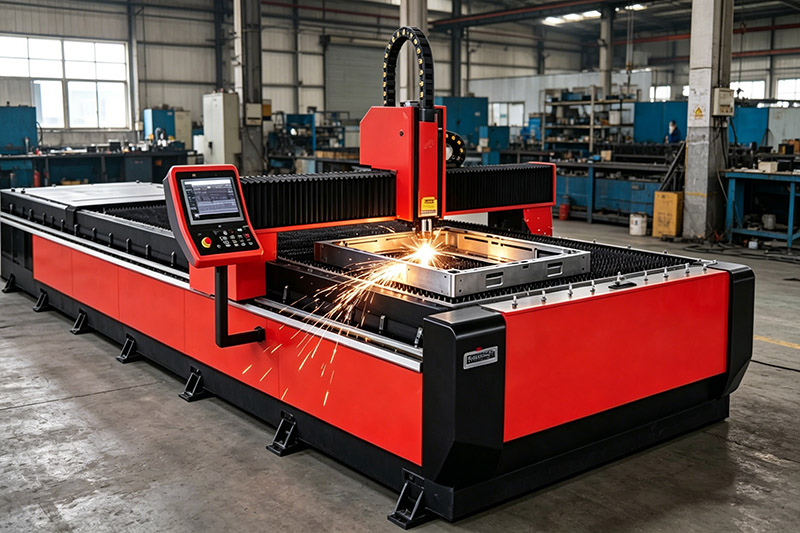
A 3 mm bracket we moved at batch six
*(Composite example; details changed.)*
He was ordering 800 at a time, about 3,000 a year, paying $8.60 a piece laser cut and bent, which is the annual-volume rate rather than a single 800-piece batch price. We quoted a progressive die at $9,400 with five to six weeks to first article, plus a stamped variable price of $3.60.
Break-even came out at 1,880 pieces. He had already bought 3,200, putting him 1,320 past the crossover and roughly $6,600 into a decision nobody revisited. He had not been wrong: laser was right for the first two releases. What was wrong was never checking again. We cut steel on the validated geometry, release six came off the press 58 percent cheaper per piece, and at 3,000 a year the die pays back in about eight months.
Design changes decide early programs
This is where the two stop being comparable, and why a moving design should stay on laser at any quantity. On a laser, a change is a file edit: move a hole 4 mm, send the model, done.
On a die it is a tooling job. Relocating one pierced hole in one station is the easy case, a new punch and button or a reworked insert plus tryout: $600 to $1,500 and one to two weeks. Move a bend line, or shift a pattern the pilots register on, and the same 4 mm becomes $3,000 or more and three to five weeks.
The rule we give customers: freeze what other people's parts touch, meaning mounting hole patterns, datums and interfaces, long before anything else. Outlines and radii can keep moving while you are on laser. Our stamping parts guide lists what to lock first; the progressive die design guide shows why station order matters.
Repeatability, and where each process runs out
On laser, a flat blank holds ±0.10 to 0.20 mm on profile and ±0.08 to 0.15 mm on hole-to-hole spacing, widening to ±0.20 to 0.30 mm on absolute position measured from the sheet datum, and each bend adds roughly ±0.25 to 0.50 mm from the datum plus ±0.5 to 1.0 degrees of angle. A progressive die pierces and forms in one tool with pilots correcting feed error, so hole-to-hole lands at ±0.05 to 0.10 mm and stays there. Not a more accurate machine, just fewer set-ups. Bands are in our sheet metal tolerance guide; the general stamping process explains why.
Freedom runs the other way: laser takes any outline inside the feature limits in our sheet metal laser cutting guide, roughly a hole diameter of 1 × thickness, a web or slot of 1 × thickness and an inside radius of 0.5 × thickness, and there is no per-station charge. Ribs and embosses that are fiddly on laser add little cycle time in a tool once the station exists.
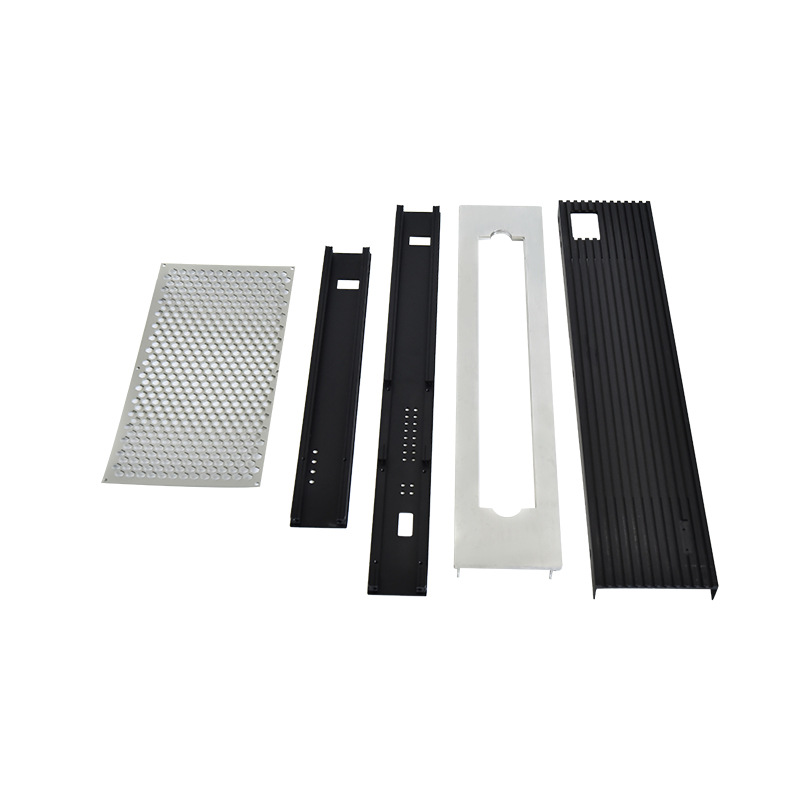
Stamping runs out at tonnage. Blanking force is roughly perimeter × thickness × shear strength, so our bracket, at about 600 mm of outline plus roughly 120 mm of pierce perimeter, 3 mm thick and 350 MPa shear, needs around 750 kN, call it 76 tonnes of cut, and with stripping and forming goes on a 160 tonne press. DP780 at roughly 550 MPa shear wants about 120 tonnes for the same part, a bigger press and a different die material; check grade data at ASM International first.
Laser runs out on heavy plate: mild steel above roughly 20 mm slows badly, aluminum wants power, copper and brass are routine on fiber and marginal on older sources. Detail belongs to our sheet metal laser cutting guide; laser cutting is a neutral starting point.
Lead time is the cleanest contrast: three to five days to first article on laser from a released drawing, against three to five weeks for a die, two to three for a blanking tool and four to six for a progressive.
The hybrid answer: laser now, die later
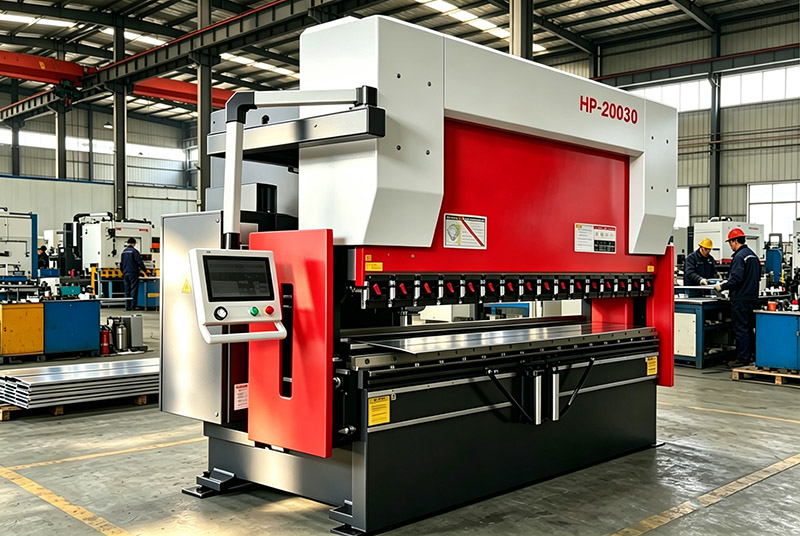
Few programs are purely one or the other. Cut samples and pilots on laser at prototype quantities, validate fit, then cut the die from the geometry that survived, keeping the laser program alive for changes and for the gap while the tool is in build.
Two hybrids come up constantly. Laser-cut outline with die-pierced holes, when the mounting pattern is frozen but the profile is still being negotiated. And the reverse, a laser-cut blank pierced and formed in a simple compound die, which gets a few hundred parts at stamped prices without full progressive tooling. At the top end the die goes on a high-speed press: at 3 mm that class of tool runs 80 to 150 strokes a minute, and tooling, not machine time, becomes the dominant cost, an inversion spelled out in our progressive die stamping guide. Deep parts go the transfer die route.
The switchover checklist
Run this with your own numbers. It answers when to use stamping instead of laser with no arithmetic beyond the formula.
| Signal | Threshold we use | Verdict |
|---|---|---|
| Program quantity | under about 1,500 pieces | Stay on laser |
| Break-even vs demand | more than two years of run rate | Stay on laser |
| Drawing status | geometry changing month to month | Stay on laser until it settles |
| Commitment | launch not funded, customer not signed | Stay on laser |
| Repeatability | hole-to-hole tighter than ±0.08 mm | Build the die |
| Thickness | over roughly 6 mm, or high-strength steel | Check press tonnage first |
| Calendar | parts needed in under two weeks | Laser first article, die in parallel |
| Feature count | three or more bends per part | Die, almost always |
FAQ: what buyers ask us
We order 1,200 a year. Is that enough for a die?
Sometimes, and the gap decides it, not the volume. At 1,200 a year with a $9,400 tool and $5.00 a piece saved, you lose money in year one and break even in year two, so we would price a cheaper compound tool first. Give us the annual number and product life.
What does it cost to move a hole after the die is built?
One pierced hole in one station runs $600 to $1,500 and one to two weeks, tryout included. Move a bend line or a pilot hole and you touch every station downstream, so it becomes $3,000 or more and three to five weeks. That is why we ask which features are frozen before steel is cut.
Can you laser cut the early batches and stamp the later ones?
Yes, and it is how most programs run. We keep the laser program live, build the die from the validated geometry, and switch at the release that suits your calendar. One inspection plan covers both.
Our part is 6 mm stainless with tight hole positions. Which way?
Six millimeter stainless is near the practical limit for economical blanking and the tonnage is serious, so we price the press before we price the die. A die holds the hole pattern better across a run, but it may need a bigger press and harder tool steel than the part looks like it deserves.
The short version after 23+ years and 200+ CNC machines: laser whenever the design is moving or the volume is uncertain, stamping whenever the drawing is frozen and the volume is real, and most parts pass through both. Send the STEP file, the material and the annual quantity, and we quote both routes with the break-even quantity written on the page. Machined features hold ±0.01 mm, critical features ±0.005 mm, under IATF 16949, ISO 9001 and ISO 13485. DFM is free, a quote comes back within 24 hours, and secondary operations are costed from the same machining cost drivers. Just send us the drawing and annual volume and we will do the arithmetic with you.