

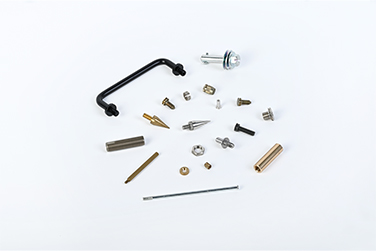
Almost every fastener in a catalogue is cold-headed: a wire is sheared and squeezed into shape in a couple of blows, at speeds measured in hundreds of parts per minute. That is unbeatable on price once you are buying millions, and it is why CNC fasteners exist in a narrower band — prototypes, low and mid volumes, materials that do not head cleanly, and geometries no header tool can form.
目录里几乎每一颗紧固件都是冷镦的:线材被剪切后经几次挤压成形,速度以每分钟数百件计。一旦年用量达到百万级,这个价格无可匹敌;正因如此,CNC 紧固件只存在于更窄的区间——打样、中小批量、冷镦成形性不好的材料,以及任何一种镦头模具都做不出来的几何形状。
We machine fasteners on turning centres and mill-turn platforms rather than heading them, which changes what is practical:
我们用车削中心与车铣复合机床加工紧固件,而不是冷镦,这改变了以下几件事的可行性:
- Tooling cost is near zero, so 20 pieces cost roughly what 2,000 do per part. A cold-headed equivalent needs a heading tool and a thread-rolling die before the first part exists.模具成本几乎为零,所以做 20 件的单件价格和做 2,000 件差不多。冷镦方案在第一件出来之前就要先投镦头模与滚丝模。
- Material freedom. 303 and 304 stainless, brass, aluminum 6061 and 7075, titanium and engineering plastics can all be machined from bar; several of them head poorly or not at all.材料自由。303 与 304 不锈钢、黄铜、铝 6061 与 7075、钛合金以及工程塑料都可以直接从棒料加工;其中有几种的冷镦成形性很差或根本无法冷镦。
- Geometry freedom. Shoulder screws, stepped standoffs, knurled nuts, captive panel fasteners and parts with cross-holes or side flats come off the machine finished.几何自由。台阶螺钉、阶梯定位柱、滚花螺母、面板固定紧固件,以及带横孔或侧扁面的零件,下机即为成品。
- Concentricity. Because the thread and the body are cut in one setup, we hold thread-to-body concentricity within 0.02 mm TIR as standard — something a transferred heading job rarely matches.同轴度。由于螺纹与本体在同一次装夹中加工,螺纹对本体同轴度标准可控制在 0.02 mm TIR 以内——这是需要转序的冷镦件通常做不到的。
The honest limit is unit cost at volume. Above roughly 50,000–100,000 pieces of a simple hex nut or spacer, cold heading plus thread rolling will beat machining on price, and we will say so at quote stage rather than quoting a part we should not be making.
坦白的边界是量产下的单件成本。简单的六角螺母或间隔柱一旦超过约 5 万–10 万件,冷镦加滚丝在价格上会胜过切削加工;我们会在报价阶段直接说明,而不是报一个本不该由我们做的零件。