
CNC machining and sheet metal fabrication both produce metal parts, but they suit very different geometries and quantities. Matching the process to the part is the fastest way to control cost and quality.
If the part is folded and welded rather than machined from solid, start with our sheet metal welding guide.
The two processes are also specified differently: sheet metal drawings run three tolerance systems side by side. The comparison is worked through in our sheet metal tolerance guide.
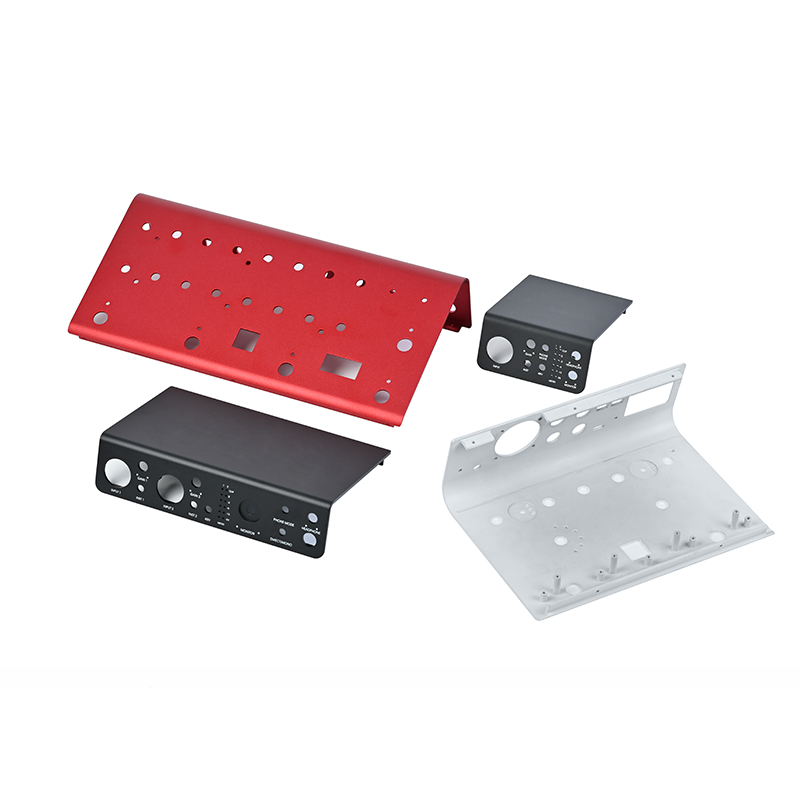
What Is CNC Sheet Metal Fabrication?
CNC sheet metal fabrication starts from flat stock rather than solid billet. A laser, turret punch or nibbler cuts the flat pattern from coil or plate, the blank is formed on a press brake along programmed bend lines, and the folded parts are joined by welding, riveting, PEM fasteners or clinching before finishing. Because material is purchased as sheet and removed only around the profile, waste is low and the unit price of a large, thin-walled enclosure beats machining from solid by a wide margin.
The trade-off is dimensional precision. Sheet metal parts typically hold ±0.2 mm to ±0.5 mm, limited by bend allowance, springback and weld distortion, whereas machining from solid routinely holds ±0.01 mm. If your design depends on precise bearing bores, sealing faces or threaded holes at a controlled true position, those features usually still need a machining operation. See our sheet metal service for gauges, bend radii and finishing options.
CNC Sheet Metal Processes: Cutting, Bending and Joining
Four operations dominate CNC sheet metal work, and each sets its own cost and tolerance floor. Laser cutting (fibre laser, 1–6 kW) is the default for complex profiles and small batches: no tooling, kerf around 0.1–0.3 mm, and ±0.1 mm on the profile. Turret punching is faster and cheaper per hit for repeated hole patterns above roughly 200 pieces, but every distinct hole shape occupies a tool station, so it suits standard perforations and louvres rather than one-off geometry. Press brake bending forms the blank; the limiting factor is springback, which changes with alloy, grain direction and thickness, which is why bend allowance is verified on a first article before a run starts. Joining — TIG or spot welding, PEM fasteners, riveting or clinching — is where most dimensional drift enters, because weld heat pulls the assembly out of square.
The practical consequence: a sheet metal enclosure that needs a sealing face, a bearing bore or threaded holes at a controlled true position is normally a hybrid part. Fabricate the shell, then finish the critical features on a machining centre. Our sheet metal and machining cells sit in the same Dongguan facility under one IATF 16949 and ISO 9001 system, so the hybrid route adds neither a second supplier nor a second quality hand-off.
The Core Difference
CNC machining removes material from a solid block, producing strong, precise solid parts. Sheet metal fabricates thin-walled parts by cutting, bending and joining flat metal sheets.
When CNC Machining Wins
Choose machining for solid parts — shafts, blocks, brackets with bosses, and parts with tight tolerances or complex internal features. Machining suits low-to-mid volumes and high strength.
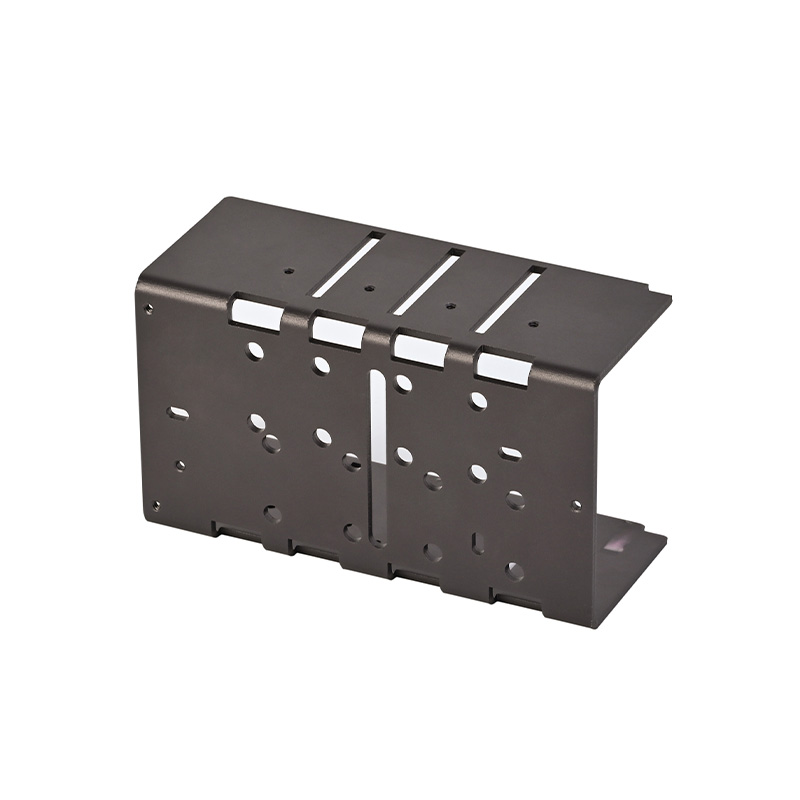
When Sheet Metal Wins
Choose sheet metal for enclosures, chassis, brackets and panels — large, hollow, thin-walled parts. It minimizes material waste and is very cost-effective at volume.
Cost Comparison
For large thin-walled enclosures, sheet metal is dramatically cheaper because far less material is removed. For small solid precision parts, machining avoids the tooling and joining costs of fabrication. For flat parts above a few thousand pieces a year, read our progressive die stamping guide before you commit to a process.
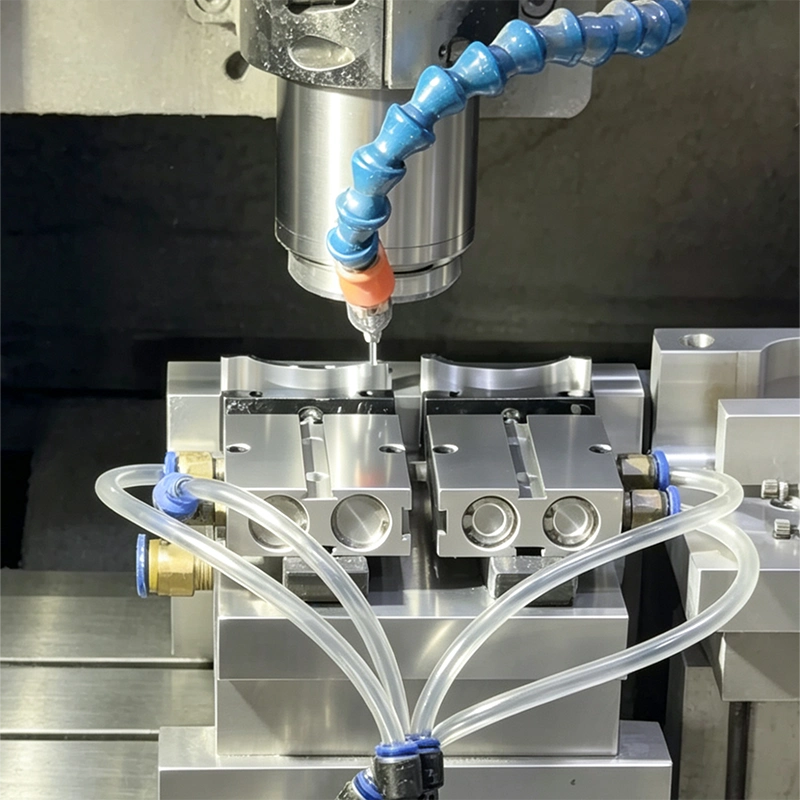
Machining Sheet Metal: Where the Two Processes Meet
The two are not mutually exclusive. Machining sheet metal is standard practice whenever a folded part needs features the brake cannot deliver: a bearing bore held to ±0.01 mm, a sealed face flat to 0.05 mm, tapped holes in a wall too thin to thread-form, or a connector aperture whose position is controlled to the enclosure datum rather than to a bend line. The part is cut and formed first, then fixtured in a CNC centre for a short second operation.
Sequence matters here. Machining before bending is cheaper to fixture but the bend will distort the machined feature; machining after bending holds the dimension but requires a fixture that clamps a formed, springy shell without crushing it. For precision machining sheet metal enclosures we almost always machine after forming, on a vacuum or soft-jaw fixture, and we hold the ±0.01 mm at the feature rather than across the whole part. CNC machining for sheet metal parts is also the right answer for short runs: below roughly 200 pieces a year, a laser-cut blank plus a milled second operation beats any hard tool on both cost and lead time.
Bending is also where flat patterns go wrong: K-factor, V-die opening and springback combine into the ±0.8–1.6 mm that accumulates across three bends — the arithmetic is set out in our sheet metal bend allowance guide.
The cost rule that follows: sheet metal carries the geometry and the material economy, machining carries the critical features. Budget the fabricated shell at its fabricated price and the machining at 10–20 minutes of cycle time, and the hybrid lands at 30–50% of an all-machined enclosure.
Combining the Two
Many products combine both — a machined precision bracket mounted inside a sheet-metal enclosure. A supplier offering both processes streamlines sourcing and assembly.
What the beam actually leaves behind on the edge, and the cut tolerances we commit to in the flat, are set out in our sheet metal laser cutting guide.
Need a machined or fabricated part? Send your drawing for a free DFM review and a quote within 24 hours.
FAQ
What CNC machining services does Ruijin CNC offer?
Ruijin CNC provides CNC turning, CNC milling (3-axis and 4-axis), 5-axis CNC machining, sheet metal fabrication, metal stamping, and surface treatment including anodizing, plating and powder coating.
What tolerances and certifications does Ruijin CNC hold?
We hold tight tolerances down to ±0.01mm across all processes, and are certified to IATF 16949, ISO 9001 and ISO 13485.
What is the minimum order quantity and lead time?
We accept prototypes from 1 piece with no strict MOQ, provide free DFM review, and return a quote within 24 hours of receiving your CAD drawing and requirements.
How do I get a quote from Ruijin CNC?
Send your STEP file and drawing to gongtianbao@xhlmarketing.com or via WhatsApp +86 17620300785. We reply with a DFM review and a firm quote within 24 hours.