
A TWS (true wireless stereo) headset shell is the part your finger touches, the surface your eye sees, and the structural envelope that holds the driver, battery, antenna, and microphone. The choice of manufacturing process — CNC machined aluminum, magnesium die casting, or plastic injection molding — drives the weight, the RF performance, the perceived quality, the cost per unit, and the speed from prototype to mass production. This guide compares the three processes on the dimensions that matter most for audio brands and consumer electronics sourcing teams.
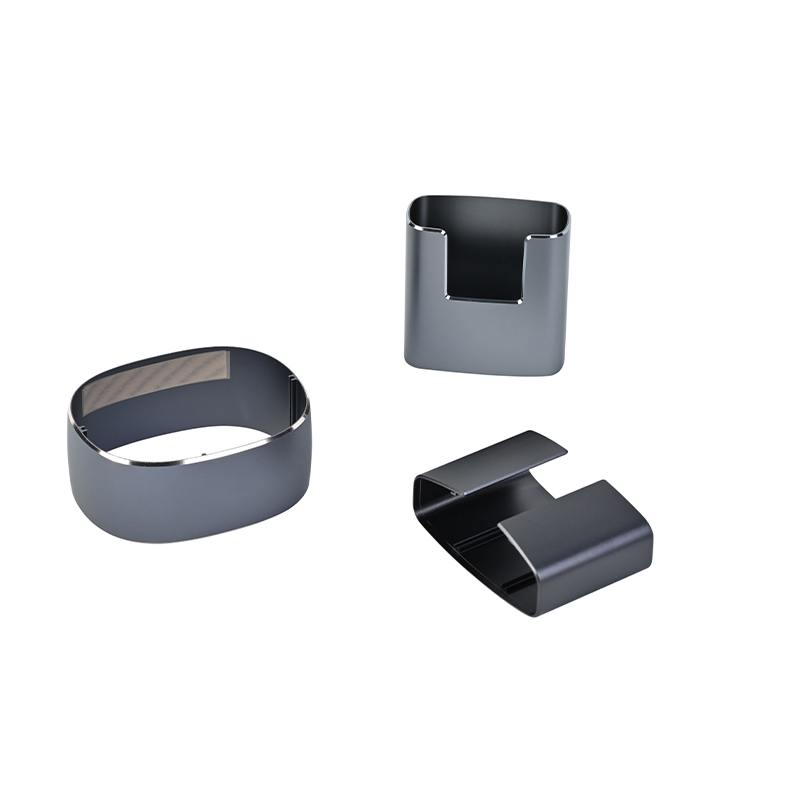
Why the Shell Process Matters for TWS
The TWS shell is small (typically 18–28mm in any dimension), cosmetic, and dimensional. It must hold tolerances on the charging contacts, the seam against the ear tip, the antenna window, and the microphone port. It must also survive sweat, skin oils, repeated insertion, and drops from ear height. A shell that is 0.1mm too thick throws off the antenna tuning. A shell with cosmetic defects on the customer-facing surface will fail the brand audit on day one.
The Three Main Processes
For TWS shells, the three dominant processes are:
- CNC machining — subtractively carved from solid aluminum (6061 or 6063), magnesium, or titanium billet.
- Die casting (magnesium or zinc) — molten metal injected into a steel die under high pressure, then trimmed and finished.
- Plastic injection molding — thermoplastic (typically PC, PC/ABS, or PA) injected into a steel mold.
1. CNC Machined Aluminum Shells
The premium process. Used by every TWS brand positioned at the $150+ retail tier. Material is typically 6063 aluminum (excellent anodizing response, good machinability) or 6061 (stronger, slightly less cosmetic). Cycle time per part is 8–25 minutes depending on geometry, with 5-axis machining the default for the undercuts and rounded organic shapes that define modern TWS design.
- Tolerances: ±0.02mm typical, ±0.01mm achievable
- Surface finish: bead-blast, brushed, mirror — and anodized in a brand-specific color
- Per-part cost: High ($1.50–$4.00 at 10K/mo volume, before anodizing)
- Tooling cost: None (no mold)
- Lead time: 5–10 days for first article, 4–6 weeks for production
- Best for: premium TWS, low-to-mid volume (under 100K/mo), limited editions, design changes mid-program
2. Magnesium Die Casting
The mid-tier volume process. Magnesium is the lightest structural metal (~1.7 g/cm³, vs 2.7 for aluminum), and die casting produces near-net-shape parts in 30–60 second cycle times. Used by TWS brands in the $50–$150 retail range.
- Tolerances: ±0.05–0.10mm as-cast (CNC post-machining required for critical features)
- Surface finish: as-cast finish, painted or anodized (requires surface treatment for cosmetic)
- Per-part cost: Low ($0.30–$1.00 at 500K/mo volume)
- Tooling cost: High ($30K–$150K for the die, depending on complexity)
- Lead time: 8–12 weeks for die, 4–6 weeks for first production parts
- Best for: mid-to-high volume (200K+/mo), brands willing to invest in tooling
The catch: die cast magnesium is porous at the surface and needs a conversion coating or anodizing before paint to avoid corrosion. Welding or repair is difficult. RF performance can be an issue if the shell is too thick or the antenna window is not properly tuned.
3. Plastic Injection Molding
The mass-market process. Used by entry-level and mid-range TWS. Material is typically PC (polycarbonate) or PC/ABS blend for impact resistance and cosmetic finish. Cycle times are 15–45 seconds.
- Tolerances: ±0.05–0.10mm typical (mold-grade)
- Surface finish: SPI-grade mold finish — A-1 mirror, A-2 matte, etc.
- Per-part cost: Very low ($0.10–$0.40 at 1M/mo volume)
- Tooling cost: High ($20K–$100K depending on cavities and complexity)
- Lead time: 6–10 weeks for mold, 3–5 weeks for first production
- Best for: high volume (1M+/mo), entry-level products, where per-unit cost dominates
Plastic does not feel as premium as metal, and the cosmetic surface does not survive heavy use as well. For TWS positioned at the $30–$80 retail range, plastic is the right call.
Comparison Table
| Dimension | CNC Aluminum | Mg Die Casting | Plastic Molding |
|---|---|---|---|
| Per-part cost (high vol) | $1.50–$4.00 | $0.30–$1.00 | $0.10–$0.40 |
| Tooling cost | $0 | $30K–$150K | $20K–$100K |
| Lead time to first part | 5–10 days | 8–12 weeks | 6–10 weeks |
| Tolerance | ±0.01–0.02mm | ±0.05–0.10mm | ±0.05–0.10mm |
| Weight (typical TWS shell) | 4–8g | 2–4g | 1.5–3g |
| RF transparency | Good with cutouts | Fair (Mg is conductive) | Excellent (plastic is RF-transparent) |
| Premium feel | ★★★★★ | ★★★★ | ★★ |
| Volume sweet spot | 10K–500K/mo | 200K–5M/mo | 1M+/mo |
Process Selection by Use Case
Use this decision tree as a starting point:
- Premium TWS, under 500K/mo, frequent design changes → CNC aluminum
- Mid-range TWS, 500K+/mo, settled design → Magnesium die casting
- Entry-level TWS, 1M+/mo, settled design → Plastic injection molding
- Limited edition / brand collab, 5–50K total → CNC aluminum (only viable option)
RF and Acoustic Considerations
The shell is part of the antenna system. For Bluetooth TWS at 2.4 GHz, the shell material and thickness affect antenna efficiency. CNC aluminum allows precise control of the antenna window thickness; die cast magnesium can be tuned but requires post-CNC machining at the antenna window; plastic is the most RF-transparent and is often paired with a flex antenna printed on the inner surface.
For acoustic performance, the shell's interior geometry and the seal against the driver are critical. CNC gives the best acoustic fit (precise tolerance, smooth machined surfaces), die casting requires careful post-machining of the driver seat, and plastic molding needs tight mold tolerances to avoid air gaps. Our earphone metal housing guide breaks down driver-seat tolerances, wall thickness and the anodizing options that survive pocket wear.
What Ruijin Does for TWS Shells
At Ruijin, the bulk of our TWS shell work is CNC machined 6063 and 6061 aluminum, with anodizing done in-house for color matching to brand specs. We have shipped shells for premium audio brands, including in-ear monitors with undercuts that only 5-axis machining can reach. We also support magnesium die casting partners for clients scaling past 500K/mo.
If you are sourcing TWS shells and want to compare processes, send your STEP file and a brief on the target volume. We will return a per-part cost comparison, a lead time, and a DFM note on which features might be problematic for your chosen process.
Sourcing TWS headset shells? Send your drawing for a free DFM review and a CNC, die cast, and plastic molding cost comparison within 24 hours.
FAQ
What CNC machining services does Ruijin CNC offer?
Ruijin CNC provides CNC turning, CNC milling (3-axis and 4-axis), 5-axis CNC machining, sheet metal fabrication, metal stamping, and surface treatment including anodizing, plating and powder coating.
What tolerances and certifications does Ruijin CNC hold?
We hold tight tolerances down to ±0.01mm across all processes, and are certified to IATF 16949, ISO 9001 and ISO 13485.
What is the minimum order quantity and lead time?
We accept prototypes from 1 piece with no strict MOQ, provide free DFM review, and return a quote within 24 hours of receiving your CAD drawing and requirements.
How do I get a quote from Ruijin CNC?
Send your STEP file and drawing to gongtianbao@xhlmarketing.com or via WhatsApp +86 17620300785. We reply with a DFM review and a firm quote within 24 hours.