
CNC turning and CNC milling are the two workhorses of precision machining, but they remove material in fundamentally different ways. Choosing the right one early saves time and money — and often a part is best made by combining both.
How They Differ
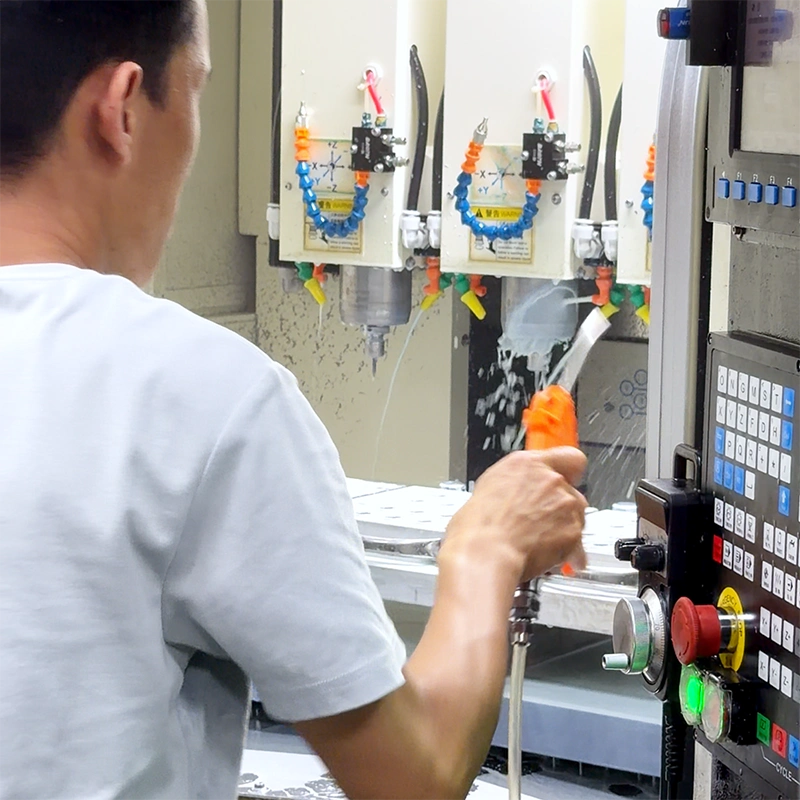
In turning, the workpiece rotates while a stationary tool cuts it — ideal for cylindrical parts. In milling, the tool rotates while the workpiece is fixed, which suits flat, contoured and complex prismatic shapes.
When to Choose CNC Turning
Turning is the best choice for shafts, pins, nuts, studs, bushings, connectors and any round part. It is fast, economical and produces excellent concentricity and surface finish on diameters. Our CNC turning service guide covers spindle capacities, live tooling and the concentricity we hold on turned diameters.
When to Choose CNC Milling
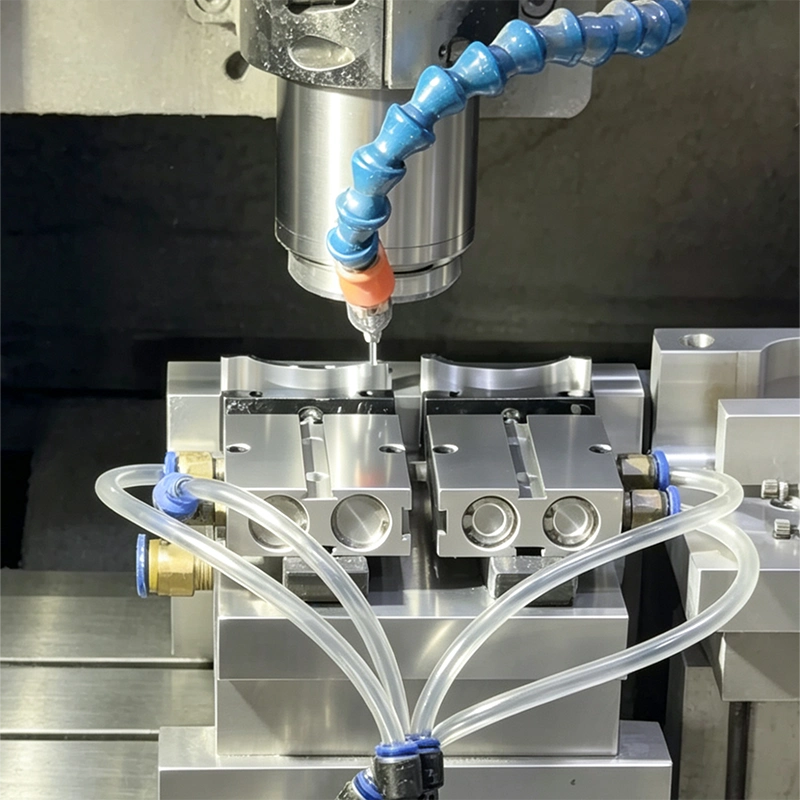
Milling handles flat faces, pockets, slots, holes, threads and complex 3D surfaces. Use it for housings, brackets, panels and parts with non-round geometry.
Combining Both Processes
Many components need both — a turned shaft with a milled keyway, or a milled housing with turned bosses. A full-service shop performs turning and milling in one facility, reducing lead time.
Choosing by Material & Cost
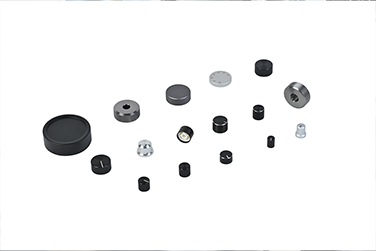
For round parts, turning is usually faster and cheaper. For complex prismatic parts, milling is required. Material waste, set-up time and batch size all influence the final cost.
Need a turned or milled part? Send your drawing for a free DFM review and a quote within 24 hours.
FAQ
What CNC machining services does Ruijin CNC offer?
Ruijin CNC provides CNC turning, CNC milling (3-axis and 4-axis), 5-axis CNC machining, sheet metal fabrication, metal stamping, and surface treatment including anodizing, plating and powder coating.
What tolerances and certifications does Ruijin CNC hold?
We hold tight tolerances down to ±0.01mm across all processes, and are certified to IATF 16949, ISO 9001 and ISO 13485.
What is the minimum order quantity and lead time?
We accept prototypes from 1 piece with no strict MOQ, provide free DFM review, and return a quote within 24 hours of receiving your CAD drawing and requirements.
How do I get a quote from Ruijin CNC?
Send your STEP file and drawing to gongtianbao@xhlmarketing.com or via WhatsApp +86 17620300785. We reply with a DFM review and a firm quote within 24 hours.